 A Frontier Exploration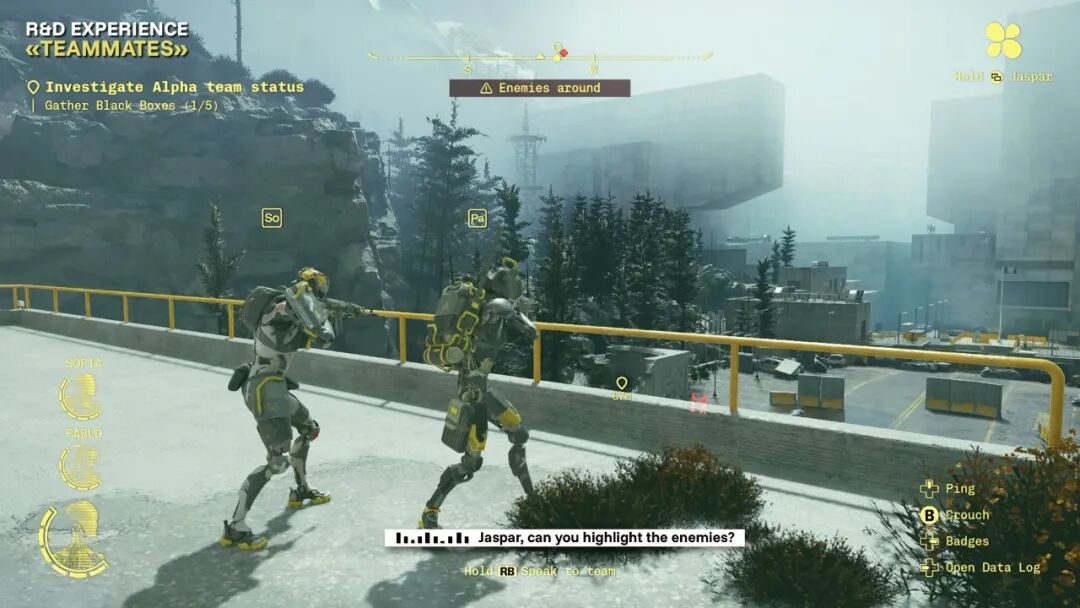
Author: Tang Chenyao
Interview Editors: Zhu Taowei; Qian Hongyan
A couple of days ago, Tencent's investment of €1.16 billion (approximately 9.5 billion RMB) into Ubisoft attracted widespread attention in the industry. Almost simultaneously, Ubisoft announced a generative AI project named "Teammates," capable of bringing significant changes to games, and offered access to a limited number of players for testing. This demonstrates the true potential of this veteran game company in exploring cutting-edge technology and gameplay.
During last year’s Game Developers Conference (GDC) in San Francisco, Ubisoft first introduced "NEO NPCs," its debut generative AI prototype designed to revolutionize player-NPC interactions, as we reported in our earlier article "GDC 2024 | Interview with Ubisoft SVP: AIGC Transforms Gameplay, Making Players the True Protagonists."
The newly announced "Teammates" project formally follows up on the "NEO NPCs" project shown earlier, with its R&D team having been recognized under France 2030—a national strategic investment initiative—for driving technological innovation in France.
Upon the project's announcement, CGames visited Ubisoft's Paris studio, where the R&D team is based, to have an in-depth exchange about the technical concepts, application scenarios, and future vision behind this AI project.
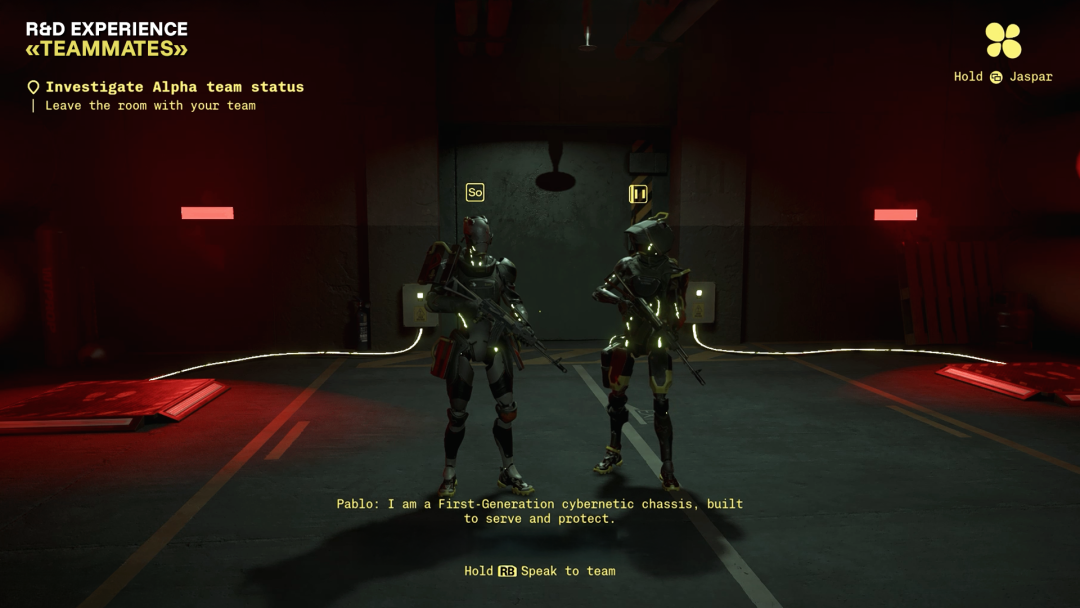
In a demonstration a year ago, NEO NPCs could already perform real-time analysis of player speech, perceive the surrounding environment, build relationships with players, respond and guide, and even formulate strategies or propose objectives based on the current conversation. The goal of this technology is to break away from the “rigid” settings of previous NPCs, allowing them to perform more diverse actions and dialogues based on predefined backgrounds, personalities, and emotions.
However, the technology was still foundational at that time. While players could converse with NPCs about almost anything in the game, they couldn’t truly participate in combat together.
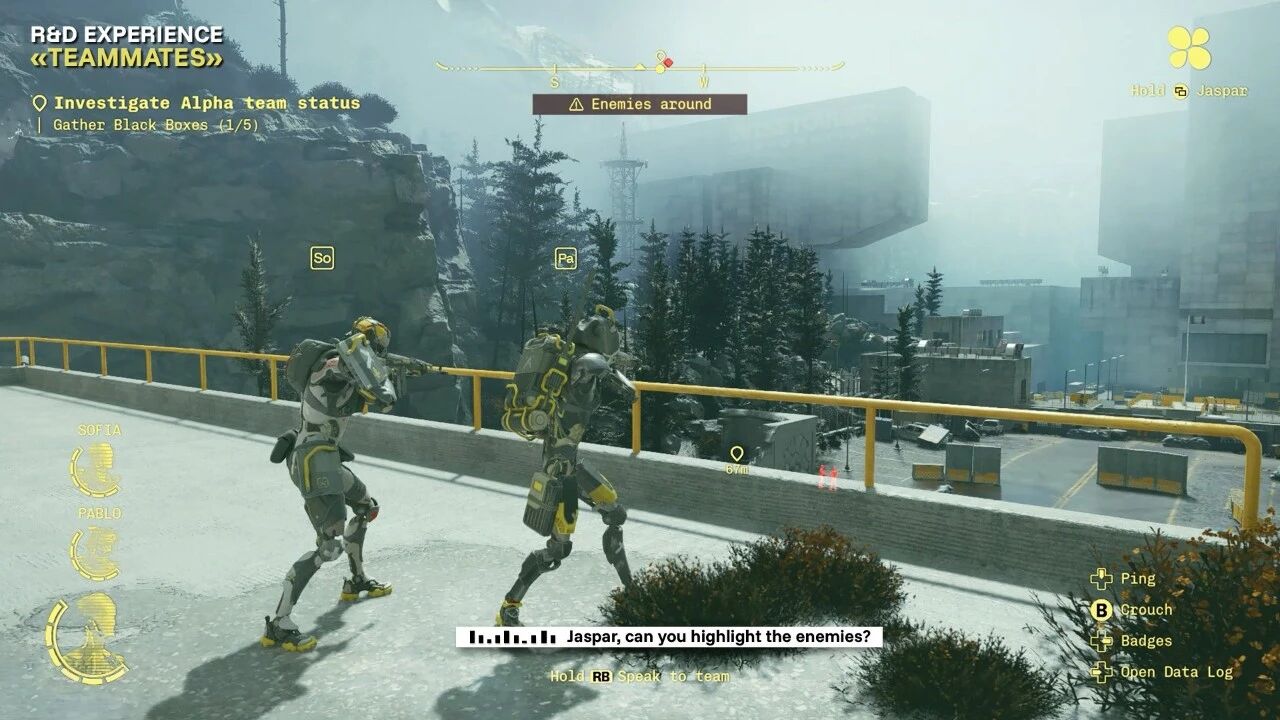
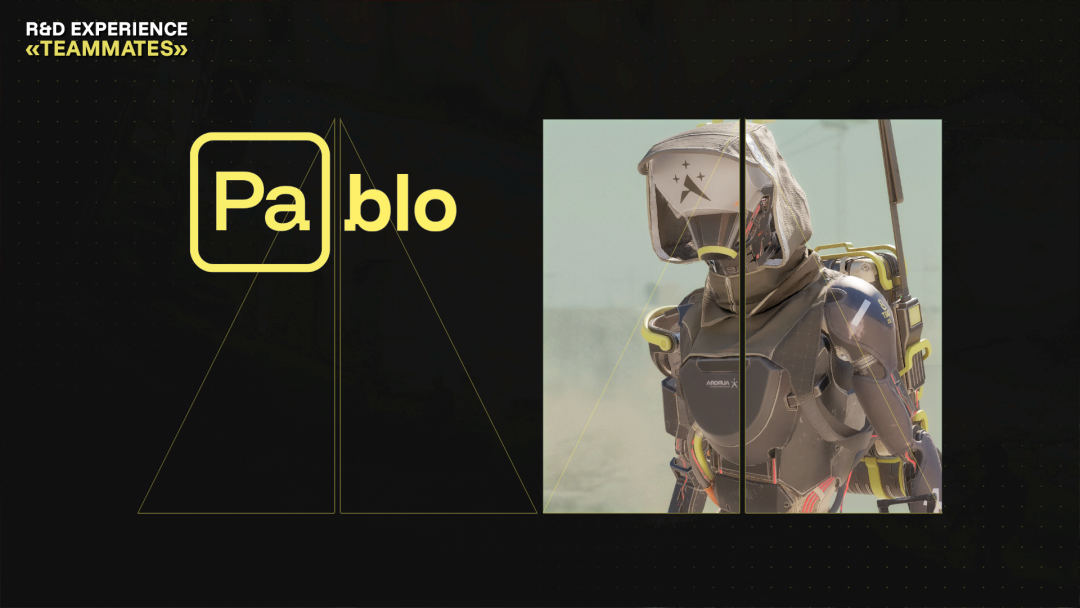
Now, a year later, the vision of such NPCs becoming “teammates” is becoming a reality. In the “Teammates” demo, players can now use voice commands to direct two AI teammates—Pablo and Sofia—and experience authentic squad-based combat in a fast-paced, ever-changing battlefield.
Xavier Manzanares, Ubisoft’s Director of Generative AI Gameplay, humbly noted:
“In the future, games will vastly improve their ability to listen, understand, and respond to players. Our research merely scratches the surface of how adaptive, generative gameplay can enhance existing game systems.”

Xavier Manzanares, Ubisoft’s Director of Generative AI Gameplay
Of course, the announcement of this project represents a critical milestone for Ubisoft’s exploration in the field of generative AI. The R&D team told CGames that the successful implementation of “Teammates” marks their arrival at the “Agent” stage within their internally defined three-stage development plan—“NPC–Agent–World”—and they are advancing towards a real and vibrant “World.”

Shooters: The First Testing Ground for Agency
Due to the nature of generative AI, including projects like NEO NPCs and Teammates, numerous game companies worldwide are focusing on exploring intelligent NPCs. Their goal is to enable closer, more natural conversational interactions between players and NPCs, thereby transforming the experience across various game genres and even influencing the operational logic of entire game worlds.
Exploration in this direction has a long history. As early as 2005, the game Façade first demonstrated how a game incorporating natural language interaction could operate. Players visit the home of a couple who react to the player's text input, determining whether you can mend their relationship.
In short, it represented the desire for seamless conversation with NPCs in games. Although the form of interaction might seem similar, the ABL (A Behavior Language) it used differs significantly from today’s LLMs (Large Language Models).
This new iteration has greatly enhanced the versatility of AI, freeing it from the constraints of communication within a single room, as in Façade—where many behavioral logics required manual setup by developers.

LLM-based AI can break free from these shackles and discuss more aspects of the game world with players. However, since the introduction of large language models into games, most AI applications have remained confined to text boxes and dialogues—like the earlier AI Dungeon or last year’s socially viral 1001 Nights.
This isn’t the complete application of AI in games. If NPCs are to interact with players within the game, it inevitably raises the question: “How does the AI perceive the world?” The inability to perceive environmental changes can lead to immersion-breaking remarks or awkward situations where statements are made but no action follows.
In the “Teammates” project demo, the two AI teammates—Pablo and Sofia—can perform actions like shooting, providing cover, following, and discussing tactics based on the player’s natural language commands—and they execute these actions well. If the NEO NPCs from a year ago demonstrated the soft power of NPCs in building relationships and communicating, the current “Teammates” showcases the hard power of NPCs joining the battlefield in combat.
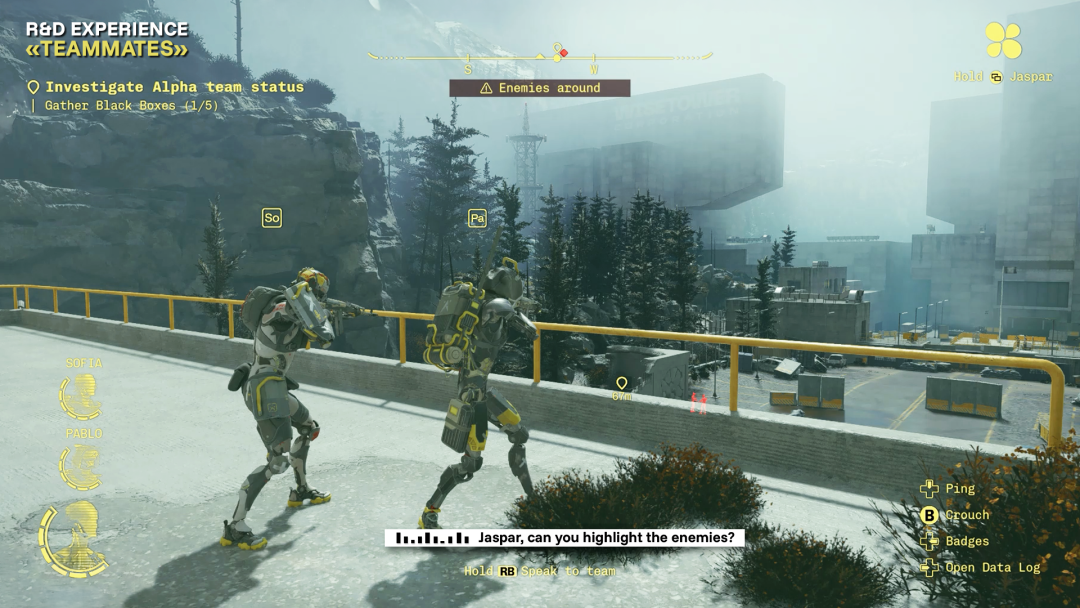
Furthermore, there is a third voice AI assistant, Jaspar, who can not only converse freely with the player—providing mission information, objectives, and briefings—but also modify the HUD and system settings, such as highlighting key objectives, summoning menus, and adjusting interface options.
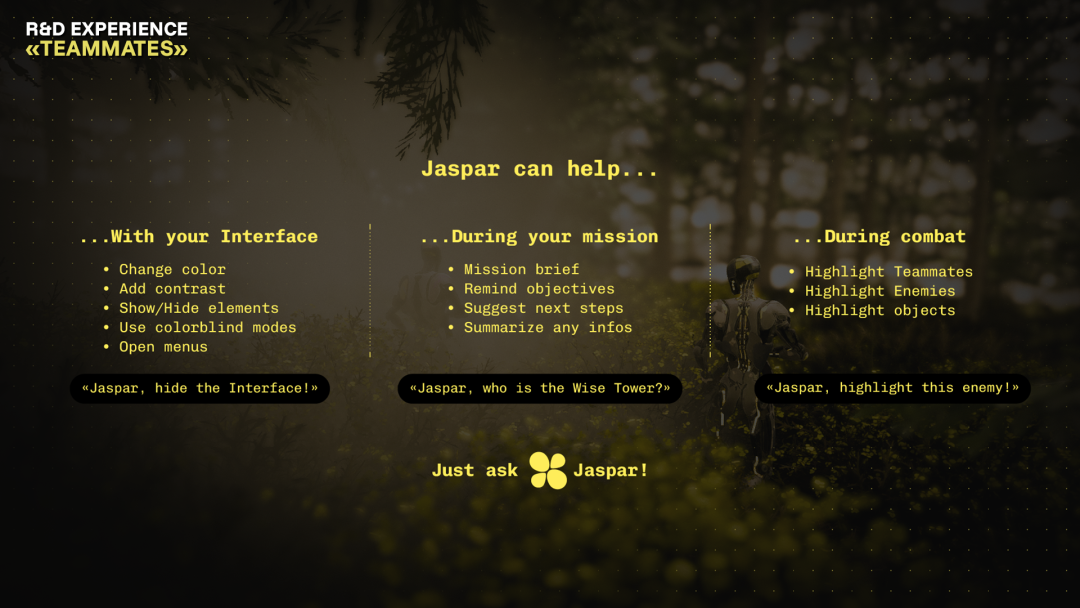
The R&D team told us that the shooting range is a highly appropriate choice for testing AI capabilities. On the battlefield, players have teammates to communicate with, objectives to focus on, and an environment for implementing tactics—requiring decisions every second. It could certainly be an RPG or another genre, but with experience accumulated from games like Tom Clancy’s The Division and Rainbow Six, an FPS is an ideal choice.
Getting AI to act based on commands still requires the use of Behavior Trees from traditional NPC design. However, on top of this, Ubisoft has added a logical layer powered by a large language model. For example, when a player says, “I’m injured,” the NPC uses this logical layer to determine that it needs not only to verbally express comfort and support but also to physically move to the player’s side and provide healing.
Achieving this decision-making has many prerequisites, as players don’t need a “mentor” who talks endlessly but takes no action, nor a “substitute” who completes all the tasks. The key lies in agency, which is also the expectation for AI Agents in the field of artificial intelligence — an autonomous entity that can observe its environment and take actions to achieve goals.
The goal of the R&D members is to enable NPCs to have reasoning abilities and to judge what they should do at any given moment based on the player’s vague instructions. “If the narrative team or the game design team tells Sofia: ‘Your role is to assist the player,’ then she should assume the responsibilities of this role.”
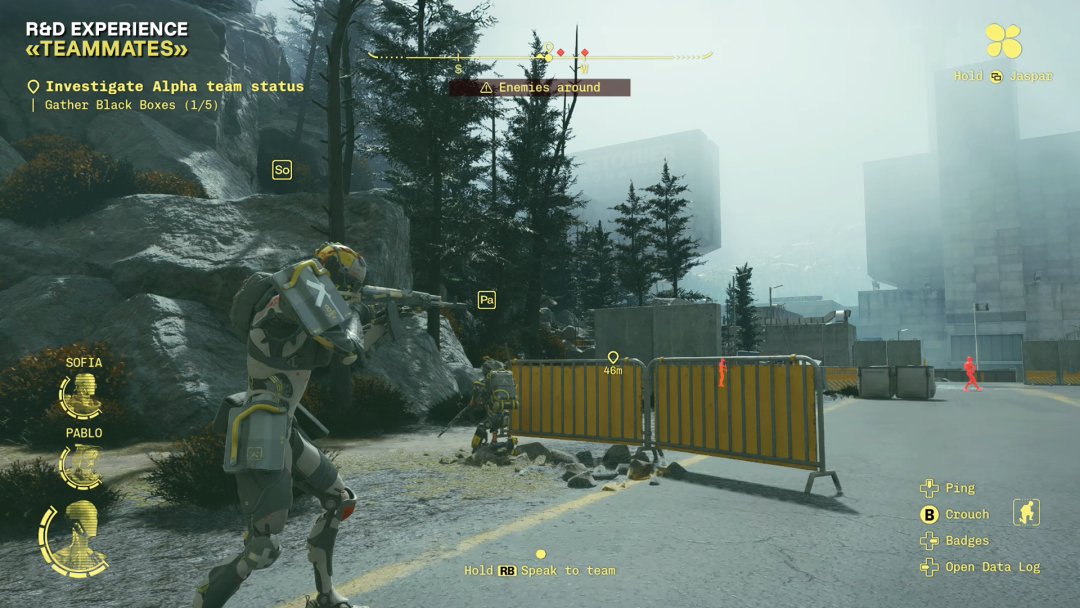
So, the “Teammates” project we see today has laid out a canvas for a future yet to be painted. With a logic layer capable of understanding players’ instructions, simply adding enough behaviors for NPCs can significantly expand the traditional gaming experience.
It’s easy to imagine that in the future, PvE shooting games focused on single-player or team-cooperative experiences will allow solo players to work alongside AI teammates to tackle levels and dungeons. Even single players could experience the emotional value of having teammates. And with the mature application of this technology, we cannot rule out the possibility that this prototype could evolve into new PvP gameplays—such as voice-controlled army commands.

From Words to Action, Aiming at Immersive Worlds
This is precisely the ultimate goal of Ubisoft’s exploration with the “Teammates” project: not just to provide two NPCs that can “understand commands,” but more importantly, to build a truly immersive world for players.
From a gameplay perspective, players don’t necessarily need every NPC in the game to have unlimited conversational capabilities—but they do crave a world that operates in a self-consistent manner. If the language model behind the “Teammates” system could be abstracted and applied to the everyday behaviors of NPCs, it might be possible to create a more vibrant, living game city.
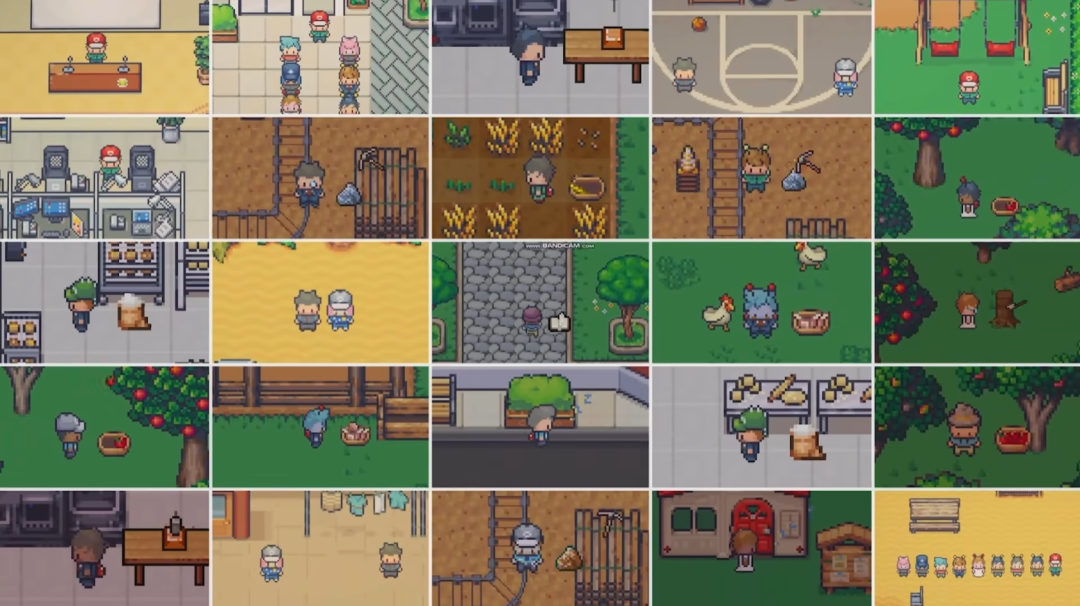
The public welfare project Aivilization, developed by The Hong Kong University of Science and Technology, created a city entirely driven by LLM-based AI
The R&D team described a scenario for us: for example, when it starts raining, pedestrians on the street would open umbrellas, quicken their pace, or take temporary shelter under eaves. NPCs with closer relationships could also share their feelings about the rain with the player—perhaps feeling “cold” or expressing concern about potential flooding—thereby presenting the player with new tasks. This represents the extension of conversation from NPCs to the entire world.
Constructing a world inhabited by a large number of Agents would undoubtedly greatly enhance player immersion, but this step also requires massive effort; “Teammates” still has a long way to go.
However, just like in 2022 when a Google engineer believed the AI he was working on might have a “soul,” leading to disputes and his departure, the Paris studio members found during testing that players also project themselves onto Pablo and Sofia, attributing meaning to certain personality traits.
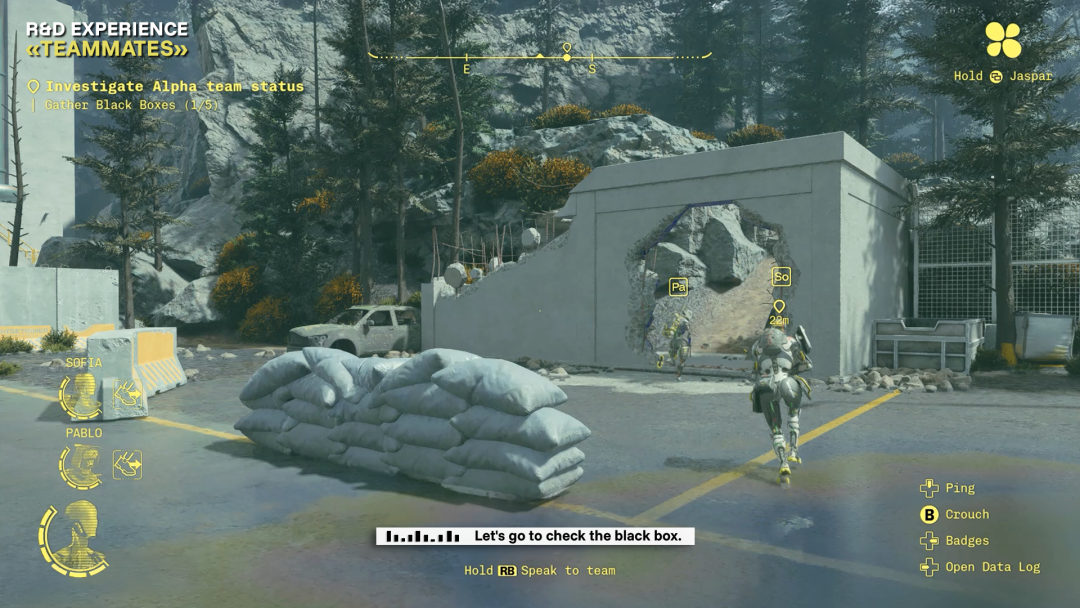
This kind of emotional experience provided by NPCs can become an important part of the game’s narrative—especially since much of the NEO NPCs technology hasn’t yet been deeply integrated into the current “Teammates” test.
“Teammates” is essentially a shooting game, and its main goal is to defeat enemies and advance the front line. But even so, some players still spend a lot of time wandering around, talking with teammates, and discussing the world itself with Jaspar.
The R&D team believes that “players have started to talk about ‘Teammates’—not just character personalities, not just technical details, but the teammates themselves,” which is exactly the effect they want to achieve. When the character system of NEO NPCs is integrated, the sense of immersion and emotional experience brought by AI will be further enhanced.

A Platform for Player-Faced AI Experiences
Currently, the “Teammates” project is in closed testing, and there’s still some fixing to do.
For example, the current “Teammates” system can only retain memories of events that occurred within about one and a half hours. Suppose a player has played with Sofia and Pablo for dozens of hours and expects this journey to be remembered by their partners—once a memory error occurs, the game’s narrative and immersive experience can be completely destroyed. This is a long-term memory challenge that most AIs are still tackling.
Regarding long-term memory, the R&D team explained that the difficulty lies not only in whether the AI’s memory is stable enough but, more importantly, whether it is sufficiently “human-like.”
In fact, a real human friend doesn’t remember every single word you’ve said or everything you’ve done, but most people vividly recall specific events—like a major explosion in the game or an amazing squad wipe you pulled off. Therefore, more technical logic needs to be introduced into intelligent NPCs to determine what the AI should remember and what it should “forget.”
Similarly, players would rightly expect “Teammates” to evolve after interacting with them—such as remembering player preferences, changing speech patterns, developing shared slang between friends, and adopting different tones and manners of speaking after 5 minutes versus 5 hours of acquaintance. Therefore, AI memory is a direction that requires long-term investment.

On a more practical level, cost is also an inevitable challenge. Currently, most AI computing power relies on cloud support, and generating content often requires paying for corresponding tokens (the minimal unit for measuring text length).
But one thing the “Teammates” demonstration confirms: developers today can already invest in creating an AI teammate that operates in deep integration with the environment and behaviors. The only question is how many additional systems and mechanisms need to be implemented.
The R&D team revealed that small independent games or AA-level titles could start using this technology as early as next year. For larger AAA titles, it’s not too far off either—perhaps arriving within 3–5 years.
This is also a challenge for Ubisoft itself, as it requires managing collaboration between different teams. For instance, during the previous NEO NPCs project, other teams would say, “What you’ve done is cool, but our project doesn’t work that way.”
Therefore, what’s needed is to connect, guide, and coach other team members so that everyone can “speak the same language.” To this end, Xavier Manzanares, Ubisoft’s Director of Generative AI Gameplay, stated that the “Teammates” experiment is both a playable prototype and a testing environment for future technology:
“You can think of it as cross-platform middleware for generative AI. We can easily integrate it into Ubisoft’s proprietary engines, Anvil and Snowdrop.”
Now the middleware has been put into operation, and members from all teams can view the code and communicate with each other. This is the true significance of building a bridge.
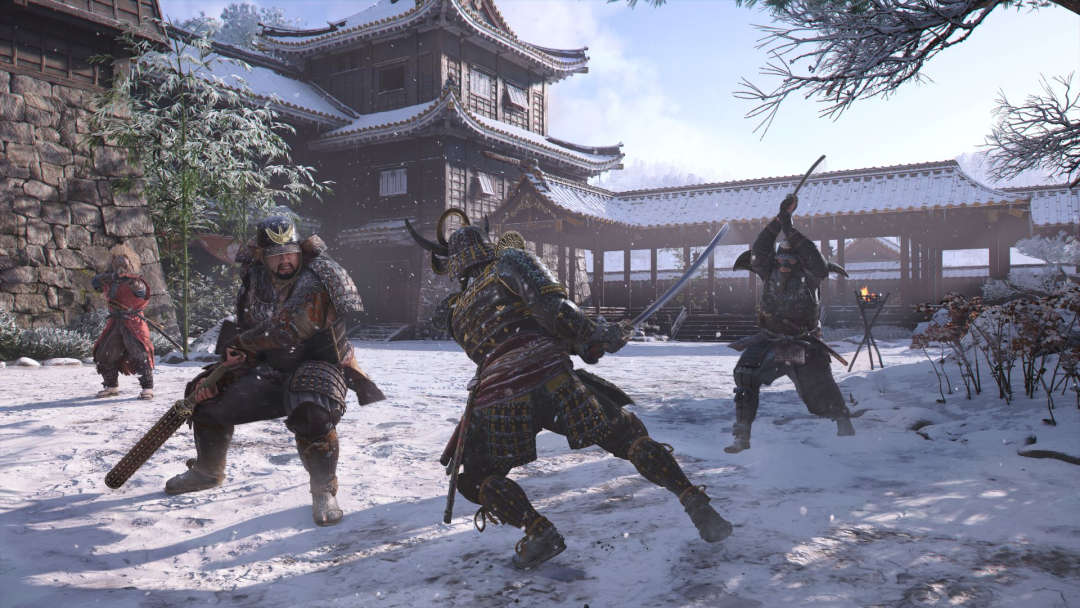
Assassin’s Creed: Shadows” was developed using the Anvil engine
“This is the first time we’ve shared an experimental project with players so early. But our goal is to provide strong technical support for Ubisoft’s creators, encouraging them to boldly imagine the value this technology will bring to their projects and players.”
Xavier also offered advice for domestic developers, independent studios, and even the entire industry: it’s crucial to spend time clearly defining your vision. In the past, with fixed interaction scripts, flaws in world-building or character design might not have been easily noticed by average players. But now, with the addition of generative AI, an inadequately designed framework will become particularly obvious—and turn into a game’s weakness.
Only by making full preparations before diving into generative development and investing significant effort in the underlying design can developers polish a near-perfect product—this is the path Ubisoft has already explored.
Being able to continuously iterate the demo to the point of initial practical application demonstrates Ubisoft’s considerable determination and resolute execution in the field of AI NPCs.
According to Ubisoft’s vision for the “Teammates” project and its practical roadmap, we can look forward to seeing AI-powered games applying this technology starting next year—gradually changing gameplay design and the way players experience certain genres. Once the butterfly flaps its wings and the flywheel of practice starts turning, the “AI gaming era” we anticipate might arrive sooner than we think.
本文系作者Tang Chenyao授权竞核发表,并经竞核编辑,转载请注明出处、作者和本文链接。想和千万竞核用户分享你的新奇观点和发现,点击这里投稿。

 竞核公众号
竞核公众号